
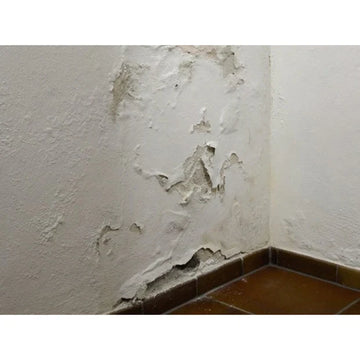
Which plaster to use to get rid of dampness in walls?
Damp walls are one of the most common problems encountered in homes, especially on the ground floor or in basements. Beyond the unsightly appearance, dampness affects health, promotes mold growth, and deteriorates the building's structure. Choosing a special plaster is essential to stop the problem and protect the walls long-term.
Why do walls get damp and crumble?
1. Water from the ground rises through the foundation
If the foundation is not correctly insulated, the walls "draw" water from the soil through the phenomenon of capillarity, similar to a sponge absorbing water from a puddle. This is the most frequent cause of dampness on the ground floor.
2. Infiltration from the exterior
Rain or melted snow penetrates through cracks, cracked plaster, or uninsulated exterior walls, leading to visible damp patches inside.
3. Condensation inside
Bathrooms and kitchens produce steam which, without good ventilation, condenses on walls. Over time, stains, peeling paint, and mold appear.
4. Broken or cracked pipes
Water or sewage pipes can leak liquid into walls, sometimes without direct visible signs. This generates constant dampness and progressive damage.
Recommended Solution – MS 20 Plaster for Damp and Damaged Walls
For effective dampness control, we recommend:
👉 Special Plaster for Damp and Damaged Walls 20 kg – MS 20
How does MS 20 work?
-
It is a capillary plaster that allows rapid evaporation of water without leaving marks.
-
It contains micro-cavities that store salts and prevent them from damaging the finishing layer.
-
It is hydrophobic – repels water and prevents further moisture penetration.
-
Provides up to 40% thermal insulation due to its structure.
-
Prevents paint peeling and swelling caused by salt efflorescence.
Areas of Use
-
Damp walls in bathrooms, kitchens, and basements.
-
Areas in direct contact with the ground.
-
Surfaces with peeled paint or damaged plaster.
How to apply MS 20 plaster?
-
Surface preparation – completely remove the salt-affected plaster layer. Repair cracks with elastic mortar.
-
Mixing – add 20 kg of product to 4 L of clean water and mix for 5 minutes until homogeneous.
-
Application in two layers:
-
First layer – approx. 5 mm thick.
-
After 24 hours, apply the second layer – approx. 20 mm.
-
-
Finishing – after 14 days, walls can be painted with vapor-permeable paints.
Conclusion
The problem of damp walls should not be ignored. If not treated correctly, dampness leads to building deterioration and high renovation costs. MS 20 is the professional, tested, and effective solution that protects your walls long-term, allowing water evaporation and blocking the harmful effects of salts.
👉 See details and order here: MS 20 Plaster for Damp Walls


